


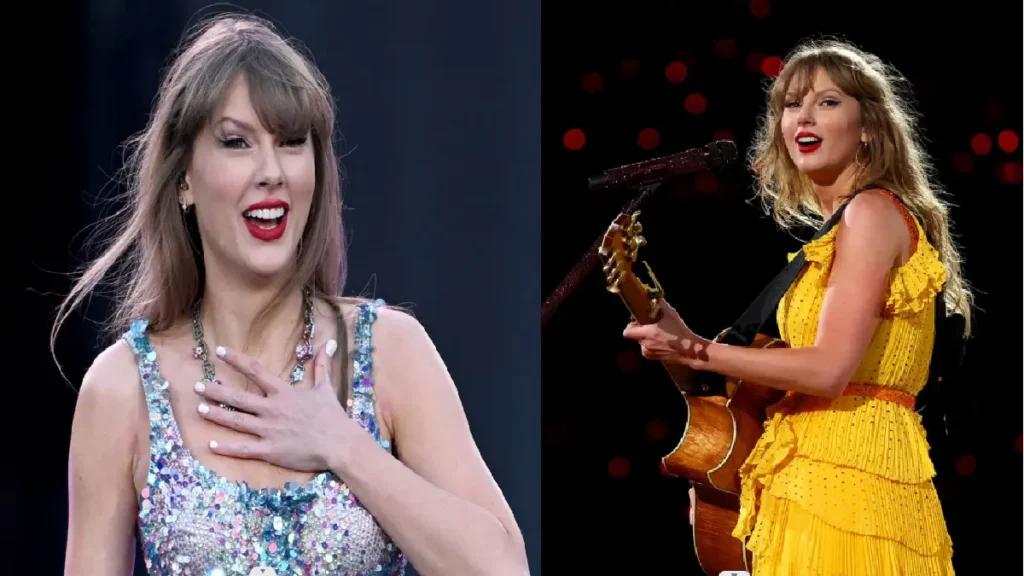
Taylor Swift’s Swift Home Trademark Dispute was resolved in record time after the pop superstar successfully challenged a federal trademark application filed by bedding manufacturer Cathay Home Inc. The company withdrew its “Swift Home” filing just days after Swift’s legal team raised objections with the U.S. Patent and Trademark Office (USPTO). According to official records, the matter was settled in less than 72 hours, avoiding what could have become a prolonged legal battle.
What Sparked Taylor Swift’s Swift Home Trademark Dispute?
Cathay Home, a New York-based textile company that sells bedding through major retailers including Target, Nordstrom, and Bed Bath & Beyond, applied in May 2025 to register “Swift Home” as a trademark. The application covered products such as pillows, mattresses, sheets, and other bedding items.
The proposed logo featured the word “Swift” in cursive script—a stylistic choice that quickly drew attention from Swift’s intellectual property team.
Why Swift’s Team Objected
Swift’s company, TAS Rights Management LLC, formally objected to the application, arguing that the stylized cursive “Swift” closely resembled the singer’s trademarked signature.
In its filing to the USPTO, Swift’s legal team stated that the presentation of “SWIFT” in Cathay Home’s logo was “highly similar” to registered versions of the artist’s name, which are designed to approximate her handwriting. The objection argued that such similarity could potentially mislead consumers into believing the bedding products were endorsed by or affiliated with Swift.
Notably, Swift already holds federal trademark registrations covering her name for merchandise, including bed linens and clothing, making the product category directly relevant.
Cathay Home Withdraws Application
By Friday afternoon, Cathay Home formally abandoned the trademark application.
Attorney Ting Geng, representing the company, told Reuters that the mark had not been used in commerce and that the decision to withdraw was a practical business choice.
“Our client has not used the disputed mark in commerce,” Geng said. “After evaluating the circumstances, our client elected not to pursue registration of a mark it did not consider essential to its business.”
Geng also noted that Cathay Home previously reached a consent-to-coexist agreement with Swift’s legal team regarding an earlier “Swift Home” trademark filed in 2015 and registered in 2016. That registration was renewed in January 2026 without issue. However, the newer cursive-styled logo appears to have prompted fresh concerns.
Taylor Swift’s Trademark Strategy
Taylor Swift has built one of the most extensive celebrity trademark portfolios in the United States. According to the BBC, she has filed hundreds of trademarks covering her name, initials, album titles, and even select lyrics.
Despite this expansive intellectual property footprint, trademark attorney Josh Gerben—who first reported the filing—told Reuters that Swift does not frequently pursue formal trademark oppositions.
“Normally, somebody that has as much invested in IP as Taylor does, we would see more activity at the Trademark Office,” Gerben said. “There just hasn’t been this really strong enforcement or policing effort around ‘Swift.’”
That makes this particular action noteworthy, especially given that the disputed logo involved a signature-style design in a merchandise category where Swift already operates.
Broader Context: Celebrities and Brand Protection
Trademark disputes are not uncommon among major artists and global brands. Musicians such as Eminem, Jay-Z, Snoop Dogg, and the band Nirvana have all filed trademark oppositions to protect names and brand identities.
For high-profile performers, trademarks represent significant commercial value. In Swift’s case, her record-breaking Eras Tour and expansive merchandise operations underscore the financial importance of maintaining strict control over branding elements associated with her name and signature.
Major corporations such as Nike, Apple, and Walmart similarly engage in trademark enforcement to protect their intellectual property.
The Takeaway
Cathay Home’s decision to withdraw its “Swift Home” application effectively ended the matter before it escalated. Swift’s legal team secured the outcome it sought, while the company opted not to pursue a potentially costly dispute over a mark it had not yet used commercially.
The case serves as a reminder of the importance of careful trademark design—particularly when using stylised scripts or names associated with globally recognised public figures.
Other Post: Taylor Swift’s Biography, Career, Net Worth, and From Small-Town Songwriter to Billionaire Global Icon