

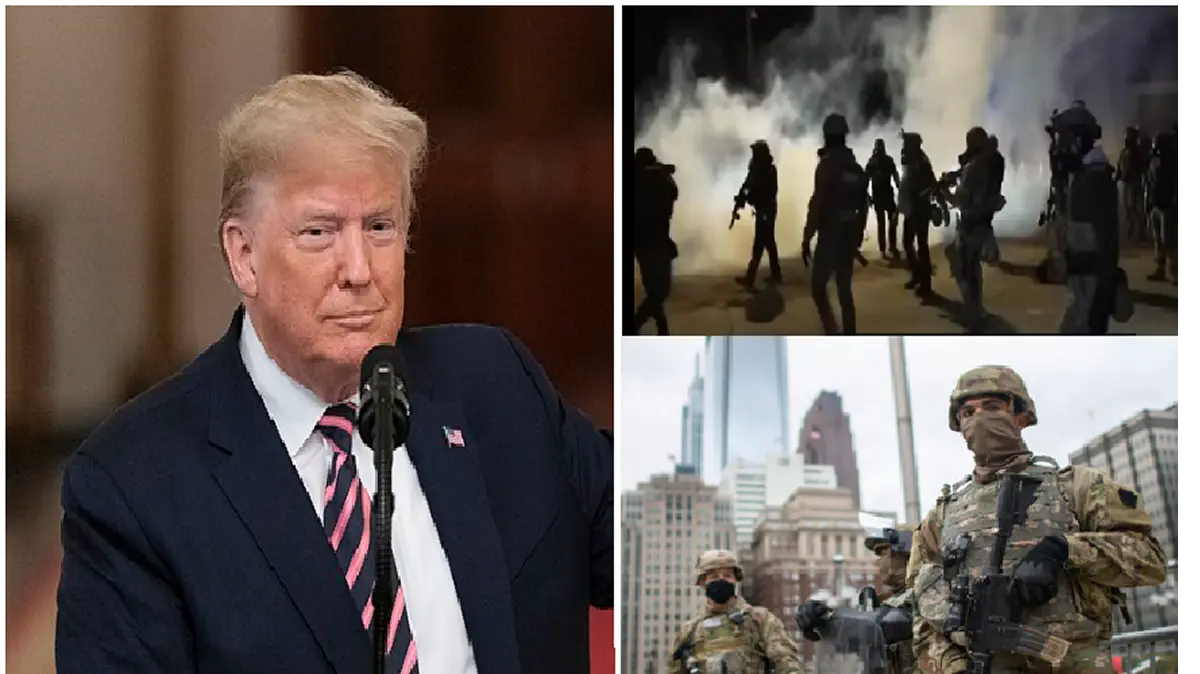
As demonstrations against Immigration and Customs Enforcement (ICE) operations continue in Minneapolis, President Donald Trump has threatened to use the Insurrection Act. Following two shootings involving federal immigration agents, the protests grew more intense.
Trump threatened to use the Insurrection Act to deploy federal forces if the situation is not brought under control and cautioned Minnesota officials to follow the law.
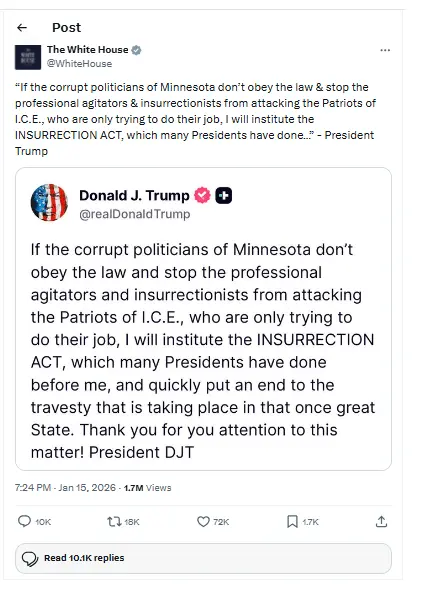
Trump posted on social media: “If the corrupt politicians of Minnesota don’t obey the law and stop the professional agitators and insurrectionists from attacking the Patriots of I.C.E., who are only trying to do their job, I will institute the INSURRECTION ACT, which many Presidents have done before me, and quickly put an end to the travesty that is taking place in that once great State.”
Why Trump Threatened to Use the Insurrection Act in Minnesota?
Trump’s warning comes amid growing tensions between federal immigration authorities and state leaders in Minnesota. According to the White House, the president believes state officials have failed to adequately protect federal agents and enforce the law during the protests.
The administration argues that if violence continues and federal law is obstructed, the president has the authority to intervene using federal troops or the National Guard under the Insurrection Act.
Other News: Iran-Linked Hackers Breach FBI Director Kash Patel’s Email, Leak Photos and Documents
what is the Insurrection Act?
A U.S. president may use the National Guard or federal troops inside the country under the Insurrection Act. It is employed in specific circumstances, such as to put an end to domestic abuse, rebellion, or disturbances that impede the application of federal law.
The Insurrection Act gives the president the power to send troops inside the country to put down uprisings, stop domestic abuse, or uphold the law in specific circumstances. Title 10 U.S.C. § 254 mandates the publication of a presidential proclamation in which the U.S. President formally orders the dispersion of the peoples committing civil unrest or armed rebellion, following the invocation and prior to the exercise of the powers authorized under the Insurrection Act.
Currently, Title 10 of the United States Code contains these provisions in Sections 251 through 255.
The Insurrection Act, according to legal experts, is extremely broad and grants the president a great deal of discretion. The law permits the president to take unilateral action if they think state authorities are unable or unwilling to enforce federal law, even though it also permits action at the governor’s request.
According to White House officials, the president alone has the authority to use the Insurrection Act, which is a legal tool that can be used in dire situations.
Trump alone would determine whether and when to invoke the centuries-old law, White House Press Secretary Karoline Leavitt told reporters after the post.
ICE’s actions have drawn harsh criticism from Minnesota Governor Tim Walz, who has called them a “campaign of organized brutality” and urged citizens to demonstrate peacefully.
FAQ – Trump Warns Iran After Deadly Protests
1. Why did Trump warn Iran?
Donald Trump warned Iran after reports that hundreds of protesters were killed during a nationwide crackdown by Iranian security forces.
2. How many people were killed in the Iran protests?
Activist groups claim that at least 572 protesters have been killed, while Iranian officials reported that around 2,000 people, including security personnel, died during the unrest.
3. What actions did Trump propose against Iran?
Trump said the United States could consider strong military action and announced a 25% tariff on countries doing business with Iran to increase economic pressure.
4. What caused the protests in Iran?
The protests were reportedly triggered by worsening economic conditions, rising prices, and public dissatisfaction with the government.
5. What has Iran said in response to Trump’s warning?
Iran’s Foreign Minister Abbas Araghchi said the country is ready for both war and negotiations, warning that Iran would respond if the U.S. takes military action.
6. Why is it difficult to confirm the exact death toll?
A nationwide internet and phone blackout in Iran has limited communication, making independent verification of the number of casualties difficult.
7. How has the international community reacted?
The UN High Commissioner for Human Rights expressed concern about the violence, while China criticized the tariff move, saying trade wars benefit no one.
Related Post:- Trump Iran Talks: Trump Claims Iran Is ‘Afraid’ to Admit Negotiations; Iran Denies
 Follow Us On Google News
  Follow Us On WhatsApp
Leave a Comment