

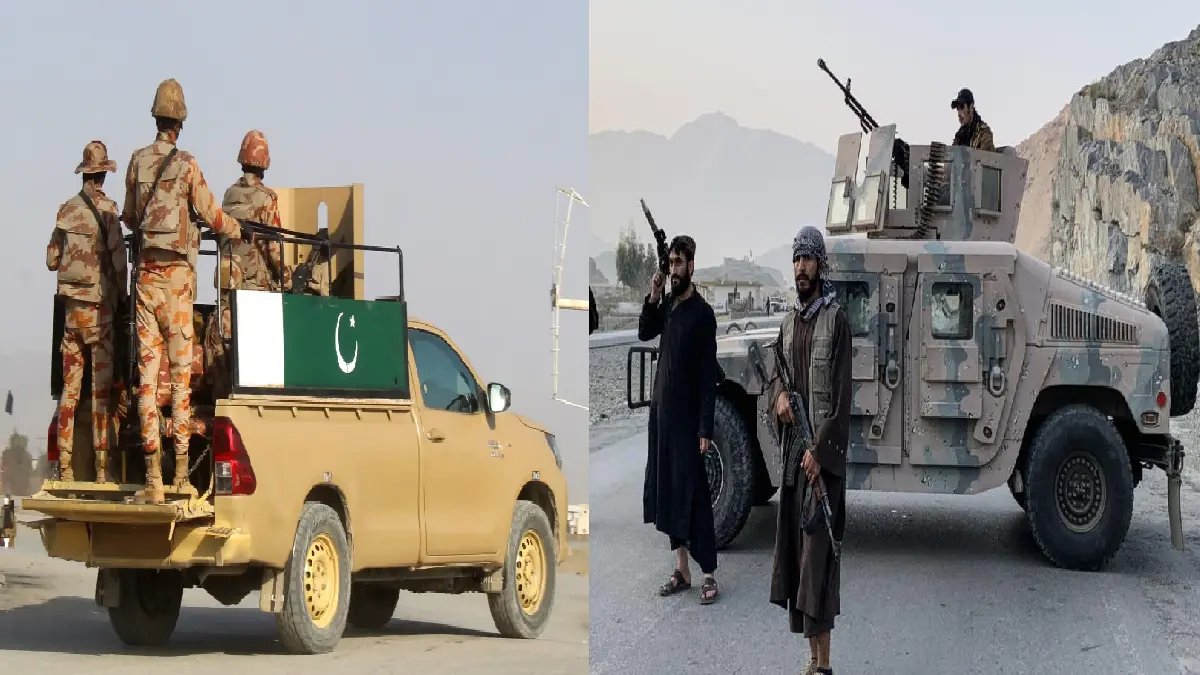
Pakistan-Taliban Border War tensions have exploded after Pakistan’s Defence Minister Khawaja Asif declared that the country is now in “open war” with the Taliban following deadly airstrikes and cross-border fighting on February 26, 2026. Pakistani warplanes struck targets in Kabul and Kandahar, claiming to have killed more than 130 Taliban fighters accused of sheltering militants.
In response, Taliban forces launched attacks on Pakistani border posts, saying they lost 55 fighters but seized control of several positions along the disputed frontier.
The latest escalation began with a Pakistani strike in Nangarhar province earlier in the week, triggering days of retaliation. Both sides have reported heavy casualties, including civilians, as violence spreads across the volatile border region.
A Century-Old Border Dispute Rekindled
At the heart of the conflict lies the long-disputed Durand Line, a 2,600-kilometer border drawn in 1893 during British colonial rule. Afghanistan has never formally recognized the boundary, and tribal communities have historically crossed it freely.
Tensions intensified after the Taliban returned to power in Kabul in 2021. Pakistan initially hoped for stability but instead reported a surge in militant attacks launched from Afghan territory. Islamabad accuses groups such as Tehrik-i-Taliban Pakistan (TTP) of using Afghan soil as a safe haven to stage assaults inside Pakistan.
Pakistan began conducting drone and jet strikes in 2024, targeting suspected militant hideouts. This week’s violence marks one of the most serious flare-ups in recent years, with refugees fleeing in both directions and key trade routes shut down.
Leaders at the Center of the Escalation
Defense Minister Khawaja Asif publicly accused the Taliban of allowing hostile elements to operate freely across the border and alleged foreign interference aimed at destabilizing Pakistan.
Taliban spokesman Zabihullah Mujahid countered by claiming Taliban fighters had overrun several Pakistani positions and vowed continued retaliation. Pakistan’s military leadership, under Army Chief Asim Munir, has defended the airstrikes as acts of self-defense.
Meanwhile, the Taliban government led by Hibatullah Akhundzada faces mounting economic pressure at home but has taken a firm stance on border sovereignty.
Pakistan-Taliban Border War: Breaking Down the Latest Fighting
Friday’s airstrikes reportedly targeted Taliban bases in Kabul and Kandahar, with Pakistan claiming significant militant casualties and no immediate losses on its side from the aerial assault.
Taliban counterattacks followed swiftly, focusing on border posts in Pakistan’s Khyber Pakhtunkhwa region. Artillery fire, drone surveillance, and heavy gun battles were reported throughout the week. Border crossings have remained closed for weeks, stranding thousands of travellers and halting trade.
The United Nations has warned of civilian casualties in villages near the conflict zone and urged both sides to pursue dialogue to prevent further escalation.
Regional and Global Reactions
India has remained publicly cautious while closely monitoring developments, particularly given longstanding tensions with Pakistan over Kashmir. China, a key investor in Pakistan through infrastructure projects, has called for restraint to protect regional stability.
The United States, which withdrew troops from Afghanistan in 2021, has urged both parties to de-escalate and avoid a broader conflict. Inside Pakistan, public opinion appears divided but largely supportive of the military response, even as economic strain grows due to trade disruptions and rising prices of fuel and food.
Afghanistan faces an even harsher humanitarian crisis, with aid organizations warning that continued fighting could deepen shortages and worsen famine risks.
Key Statements from Both Sides
Khawaja Asif stated on social media, “Our patience has reached its limit; this is open war between us and the Taliban.”
Zabihullah Mujahid responded, “We launched large-scale operations in retaliation for their aggression.”
Pakistan’s Prime Minister’s Office rejected Taliban claims of territorial victories, insisting the military remains in control of key positions.
What Comes Next?
Analysts warn that while the clashes resemble previous short-lived escalations, the intensity and political rhetoric suggest a more dangerous phase. Whether diplomatic channels reopen or the conflict deepens into sustained warfare remains uncertain.
For now, the disputed frontier remains on edge, with regional powers and global observers watching closely as two neighbors confront one of their most serious confrontations in years.
FAQ: Pakistan–Taliban Border War
1. Why did the Pakistan–Taliban border conflict escalate?
The conflict escalated after Pakistan launched airstrikes in Afghanistan, targeting Taliban fighters it accused of supporting militant groups responsible for attacks inside Pakistan.
2. What is the Durand Line dispute?
The Durand Line is a 2,600-kilometer border established in 1893 during British rule. Afghanistan has historically refused to formally recognize the boundary, leading to recurring tensions.
3. How did the Taliban respond to Pakistan’s airstrikes?
Taliban forces reportedly launched counterattacks on Pakistani border posts, claiming to have seized several positions and inflicted casualties on Pakistani forces.
4. Which militant group is linked to the conflict?
Pakistan has accused the Tehrik-i-Taliban Pakistan (TTP) of launching attacks from Afghan territory, alleging that the group receives support or safe haven across the border.
5. Who are the key leaders involved in the crisis?
Key figures include Pakistan Defence Minister Khawaja Asif, Army Chief Asim Munir, and Taliban spokesman Zabihullah Mujahid, while the Taliban government is led by Hibatullah Akhundzada.
6. How has the conflict affected civilians and trade?
The fighting has caused civilian casualties, refugee displacement, and closure of major border crossings, disrupting trade routes between Pakistan and Afghanistan.
7. What has been the international response to the conflict?
Countries including China and the United States have called for restraint, while the United Nations has urged both sides to pursue diplomatic dialogue to prevent further escalation.
Other News: Kim Jong Un Vows to Boost Nuclear Weapons at Massive Pyongyang Military Parade
 Follow Us On Google News
  Follow Us On WhatsApp
Leave a Comment