

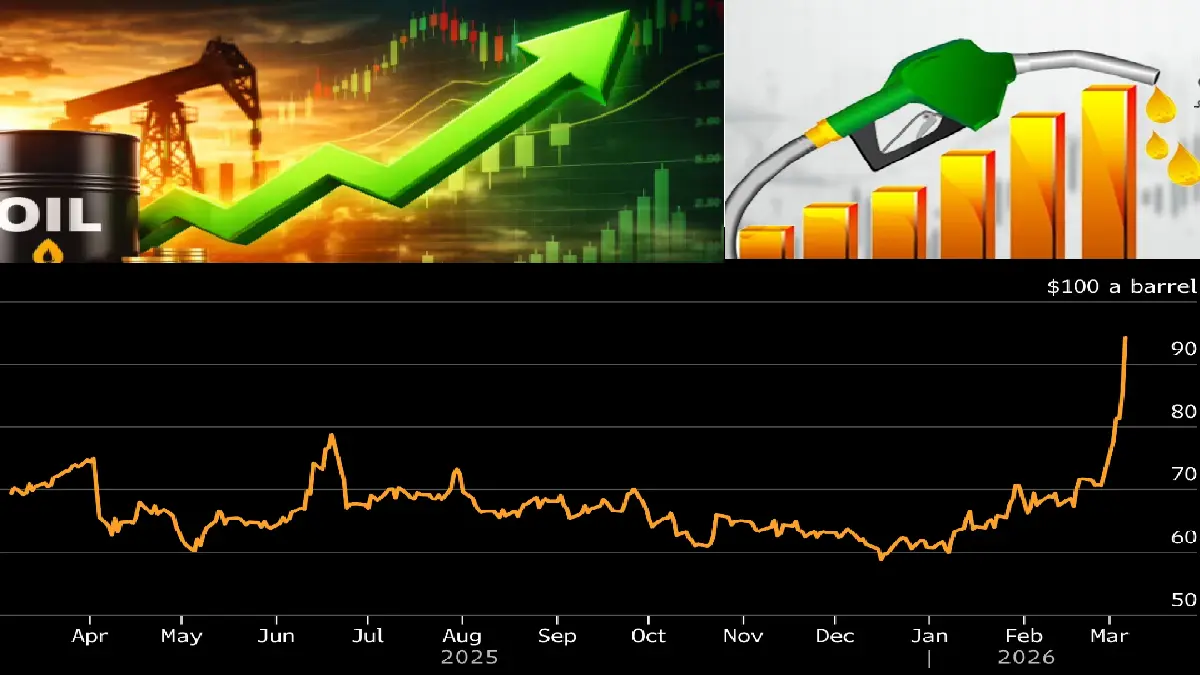
The Iran war oil prices surge has shaken global energy markets after crude oil climbed above $100 per barrel. The conflict in the Middle East has disrupted supply routes, increased tensions around key shipping lanes, and triggered fears of a wider global energy crisis.
This global oil price surge has raised concerns among governments, businesses, and consumers who depend heavily on stable energy supplies.
The conflict in the Middle East has disrupted oil production, shipping routes, and supply chains, creating what many analysts now call a Middle East oil crisis. As tensions continue to rise, energy markets are facing growing uncertainty about the future of oil supply.
Experts warn that the impact of the Iran war on oil prices could extend far beyond the region, potentially triggering inflation, economic slowdown, and a broader global energy crisis 2026.
A Sudden Jump in Oil Prices
The recent oil prices above the $100 mark represent one of the most dramatic increases in recent years. Crude prices crossed the psychological barrier after reports of attacks on infrastructure and disruptions to shipping routes in the Persian Gulf.
This global oil price surge happened quickly as investors reacted to fears that oil exports from the region could be interrupted. Brent crude, the international oil benchmark, jumped sharply as traders rushed to secure supplies.
Many analysts believe this sudden spike explains why oil prices crossed $100 so quickly. Even before the conflict intensified, markets were already tight due to limited supply and rising global demand.
When geopolitical tensions escalated, the Iran conflict oil market reaction was immediate. Some reports suggested oil prices increased by nearly 20 percent within a week, showing how sensitive energy markets are to instability in the Middle East.
The Role of the Iran Conflict in the Oil Market
The Iran conflict oil market impact has been significant because the Middle East is responsible for a large share of global oil production. When conflict threatens production or transport routes, markets react almost instantly.
One of the biggest concerns is the Strait of Hormuz oil supply disruption. This narrow waterway between Iran and the Arabian Peninsula is one of the world’s most critical energy chokepoints.
Nearly 20 percent of the world’s oil passes through the Strait of Hormuz every day. Any disruption in this route could severely affect global energy supply.
As the war intensified, tanker traffic slowed and shipping companies became cautious. Many feared missile or drone attacks on oil tankers, which could worsen the Strait of Hormuz oil supply disruption and restrict oil flow to international markets.
How Iran War Oil Prices Are Disrupting Global Energy Markets
Understanding how the Iran war affects global oil markets requires looking at the chain reaction created by conflict in major oil-producing regions.
Several factors linked to the conflict have pushed prices higher:
Shipping disruptions: Tankers have avoided risky areas, slowing oil deliveries.
Reduced production: Some producers have lowered output due to security concerns.
Infrastructure attacks: Military strikes on energy facilities have raised fears of long-term damage.
Market speculation: Traders often react quickly to geopolitical risk, driving prices higher.
Together, these factors have contributed to the global oil price surge and increased volatility in the energy market.
Analysts warn that if tensions escalate further, oil prices could rise even higher. Some worst-case projections suggest crude could reach $150 per barrel if supply disruptions intensify.
Impact on the Global Economy
The impact of Iran war on oil prices is already being felt across the global economy. Oil is not only used for transportation fuels like gasoline and diesel but also for manufacturing, shipping, and electricity production.
When oil prices rise sharply, transportation costs increase, which eventually raises the price of everyday goods.
This situation has sparked fears of a potential global energy crisis 2026, especially if the conflict spreads or disrupts more production facilities in the region.
Countries that rely heavily on imported oil may feel the biggest impact. Major energy importers like India, China, Japan, and South Korea depend on stable supplies from the Middle East.
If the Strait of Hormuz oil supply disruption worsens, these nations could face significant fuel shortages or higher import costs.
India, for example, imports more than 80 percent of its crude oil. Rising prices could increase the country’s trade deficit and place pressure on its currency and inflation levels.
A Fragile Global Energy System
The ongoing Middle East oil crisis highlights how fragile the global energy system can be. Even limited disruptions in major oil-producing regions can quickly spread through international markets.
Governments and international organizations are now considering emergency measures, including releasing oil from strategic reserves to stabilize supply.
However, the future of the Iran conflict’s oil market impact remains uncertain. If tensions continue or spread to other energy infrastructure, markets could experience even greater volatility.
For now, traders and policymakers are watching the situation closely. The Iran war oil price surge has already demonstrated how quickly geopolitical conflict can reshape global energy markets.
With the world increasingly dependent on stable energy supplies, the next developments in the conflict could determine whether oil prices continue climbing—or finally begin to fall.
FAQ: Iran War Oil Prices Surge Past $100
1. Why did oil prices surge above $100 during the Iran conflict?
Oil prices surged above $100 per barrel mainly due to rising tensions in the Middle East. The Iran conflict raised fears of supply disruptions, especially around major shipping routes like the Strait of Hormuz, causing traders to react quickly in global energy markets.
2. How does the Iran war affect global oil prices?
The Iran war affects global oil prices because the Middle East is one of the world’s largest oil-producing regions. Any conflict that threatens oil production, transport routes, or infrastructure can quickly reduce supply and push prices higher.
3. Why is the Strait of Hormuz important for global oil supply?
The Strait of Hormuz is a critical shipping route that carries nearly 20% of the world’s oil supply each day. If tanker traffic is disrupted due to conflict or security risks, global oil markets can experience immediate price spikes.
4. Which countries are most affected by rising oil prices?
Countries that rely heavily on imported oil—such as India, China, Japan, and South Korea—are among the most affected. Higher oil prices increase fuel costs, transportation expenses, and inflation in these economies.
5. Could the Iran conflict lead to a global energy crisis?
Yes, experts warn that prolonged conflict in the Middle East could trigger a global energy crisis. If oil production facilities or shipping routes are severely disrupted, energy shortages and higher prices could impact economies worldwide.
6. How do geopolitical conflicts influence energy markets?
Geopolitical conflicts create uncertainty in energy markets. Investors and traders often react quickly to potential supply disruptions, which can cause sudden spikes in oil prices and increased market volatility.
7. Could oil prices rise even higher if the conflict escalates?
Energy analysts believe oil prices could rise further if the conflict spreads or major oil infrastructure is damaged. In extreme scenarios involving prolonged supply disruptions, crude oil prices could potentially reach $120–$150 per barrel.
8. How are governments responding to rising oil prices?
Some governments are considering releasing oil from strategic reserves, increasing domestic production, or securing alternative supply routes to stabilize global energy markets and prevent fuel shortages.
Other Post: What Is NATO? How the 75-Year-Old Alliance Still Shapes Global Politics
 Follow Us On Google News
  Follow Us On WhatsApp
Leave a Comment