

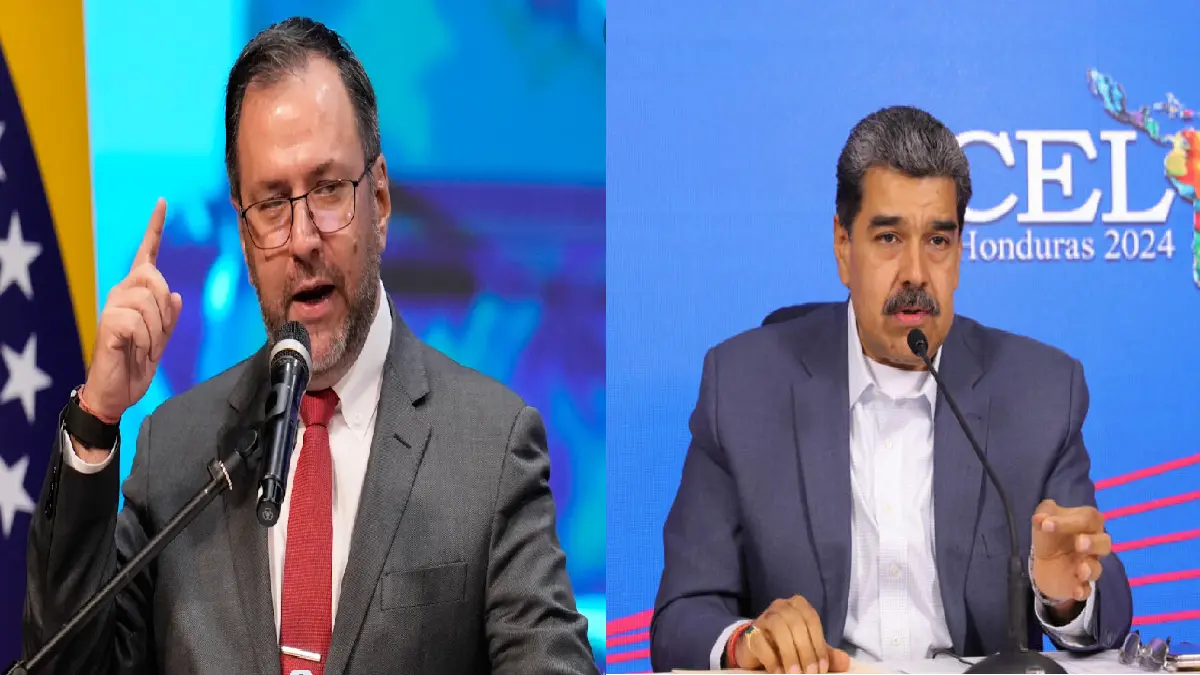
Venezuela’s “Release Maduro Now” demand is resonating both at home and abroad as officials and citizens alike call for the immediate release of former president Nicolás Maduro, captured by US forces in a controversial raid earlier this year. The Venezuelan government insists the United States must release Maduro immediately, claiming his capture violates sovereignty and international law.
“Release Maduro Now” Becomes Rallying Cry Across Venezuela
Tensions began on January 3, 2026, when US special forces entered Maduro’s residence in Caracas and apprehended him and his wife, Cilia Flores, in an operation linked to drug charges filed in the United States. Caracas has condemned the operation as an illegal abduction that resulted in the deaths of over 100 people, while Washington defends the raid as lawful enforcement tied to charges in New York.
Maduro, now 63, has pleaded not guilty and has described himself as a prisoner of war—a phrase that has become a rallying cry among his supporters. His detention has sparked massive protests across Venezuela and in Venezuelan diaspora communities worldwide, with demonstrators waving signs that label him the true president and accusing the US of imperialism.
Diplomatic Pressure Mounts at the United Nations
At the United Nations Human Rights Council in Geneva on February 24, Venezuela’s Foreign Minister Yvan Gil Pinto delivered a forceful speech urging the immediate release of Maduro and Flores, framing the issue as a violation of human rights and international law. Pinto appealed for dialogue based on mutual respect and called on the UN to hold the United States accountable.
The situation has drawn global attention, with Russia’s Deputy Foreign Minister Dmitry Lyubinsky joining calls for Maduro’s release and accusing the United States of breaching the UN Charter. The international backing adds pressure as US-Russia relations remain strained over other geopolitical conflicts.
Political Shifts Inside Venezuela
Domestically, Venezuela’s political landscape continues to shift. An interim government led by Delcy Rodriguez has enacted an amnesty law aimed at releasing political prisoners, though critics argue it fails to address broader human rights abuses and lacks comprehensive reform.
Legal and Global Implications
Legal experts remain divided on whether the United States can detain the leader of another country under international law. Some argue that such actions violate norms against unilateral force, while others claim that serious criminal charges justify enforcement when diplomacy falters.
As the standoff persists, the United States maintains its stance that the operation was about combating crime and promoting stability. Yet critics warn that the fallout may have lasting effects on international relations and the global perception of intervention and power dynamics. With all eyes watching, the “Release Maduro Now” call is at the center of a complex and evolving flashpoint.
FAQ: “Release Maduro Now” and the Maduro Detention Crisis
1. Why are people chanting “Release Maduro Now”?
Supporters of Nicolás Maduro are demanding his release after he was captured by U.S. forces during a military operation in January 2026, triggering protests and diplomatic tensions.
2. How was Nicolás Maduro captured?
On January 3, 2026, the United States launched a military operation in Venezuela that targeted Maduro’s compound in Caracas and captured him and his wife, Cilia Flores.
3. Why does the United States want to prosecute Maduro?
U.S. authorities accuse Maduro of narco-terrorism and drug trafficking, including allegations that he helped coordinate cocaine shipments to the United States.
4. Where is Nicolás Maduro now?
After his capture, Maduro was transported to the United States and is expected to face legal proceedings there, according to U.S. officials.
5. Who is leading Venezuela after Maduro’s capture?
Following the operation, Delcy Rodríguez assumed leadership as acting president, while the country navigates political and diplomatic fallout.
6. How has the international community reacted?
Several governments in Latin America criticized the operation, arguing it could violate international law and Venezuela’s sovereignty, while others supported the action against Maduro’s government.
7. Why is the situation important globally?
The crisis affects regional stability, global oil markets, and international relations, making the “Release Maduro Now” movement a major geopolitical flashpoint.
Other News: Trump Warns of Higher Tariffs After Supreme Court Ruling
 Follow Us On Google News
  Follow Us On WhatsApp
Leave a Comment