


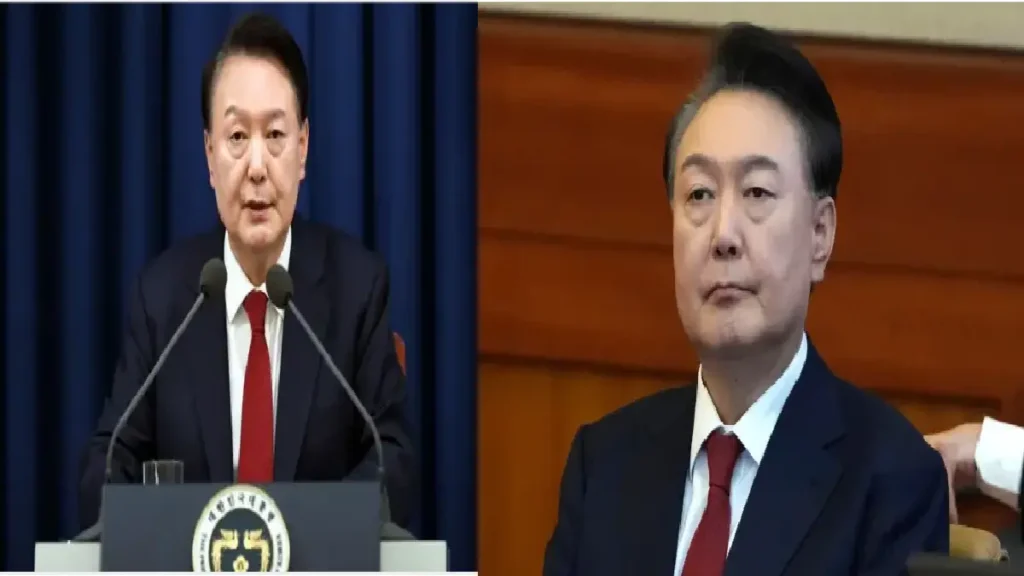
South Korea’s Ex-President Yoon Suk-yeol Jailed for Life—a historic ruling that has reshaped the country’s political landscape. A Seoul court sentenced former president Yoon Suk-yeol to life imprisonment after finding him guilty of masterminding an insurrection linked to his December 2024 declaration of martial law. The decision marks one of the most significant judicial actions taken against a democratically elected leader in South Korea’s modern history.
Court Finds Yoon Guilty of Insurrection
In a lengthy and closely watched trial, the Seoul Central District Court concluded that Yoon orchestrated an unlawful attempt to undermine constitutional order. Judges ruled that his decision to deploy troops and police forces around the National Assembly during the martial law declaration amounted to a coordinated effort to paralyze the legislature.
Prosecutors had sought the death penalty, citing provisions related to armed rebellion. However, the court opted for life imprisonment, noting that while the actions were severe, the situation did not result in large-scale casualties.
The court described the move as a “direct and calculated assault on democratic governance,” emphasizing that no public official, regardless of position, stands above the law.
The Martial Law Crisis of 2024 for Which South Korea’s Ex-President Yoon Suk-yeol Jailed
The political crisis began in late 2024 amid escalating tensions between Yoon and opposition lawmakers. Facing legislative gridlock, Yoon addressed the nation on television and declared martial law, claiming it was necessary to restore order.
Within hours, security forces surrounded the National Assembly. Lawmakers reportedly scrambled to enter the building, while citizens gathered outside in protest. The declaration was swiftly challenged, and under intense public and political pressure, Yoon withdrew the order the same day.
The dramatic reversal highlighted the resilience of South Korea’s democratic institutions, as both legislators and citizens resisted what many saw as executive overreach.
Swift Impeachment and Removal from Office
Just days after the failed martial law attempt, the National Assembly voted to impeach Yoon. In spring 2025, the Constitutional Court upheld the impeachment, officially removing him from office.
Subsequently, prosecutors filed multiple charges, including abuse of power and obstruction of justice. Yoon had already received a separate five-year sentence in an unrelated case involving allegations of blocking investigative procedures. However, the insurrection charge became the centerpiece of the legal battle.
Senior Officials Also Sentenced
The fallout extended beyond the former president. Several senior officials were handed lengthy prison terms:
Kim Yong-hyun, former defense minister, received 30 years for coordinating military involvement.
Han Duck-soo, former prime minister, was sentenced to 23 years for falsifying cabinet approval documents.
Additional military and police officials were convicted on related charges.
Prosecutors described the coordinated effort as a “systematic attempt to destabilize constitutional governance.”
Political Reactions and National Divide
Public reaction has been sharply divided. Supporters of Yoon claim the prosecution was politically motivated, arguing that the former leader was responding to extraordinary legislative obstruction. Meanwhile, critics view the verdict as a necessary defense of democratic principles.
Outside the courthouse, demonstrators from both camps gathered, reflecting the continuing polarization within South Korean society.
Current President Lee Jae-myung called the ruling “a victory for constitutional order,” stating that the decision reinforces the nation’s democratic safeguards.
A Rare Global Precedent
The life sentence places South Korea among a small group of nations where a democratically elected president has been convicted for actions amounting to an attempted coup. Observers have drawn comparisons to the military-era prosecutions of the 1990s, though analysts note that this case unfolded entirely within established democratic institutions.
Yoon’s legal team has announced plans to appeal the verdict, leaving the final outcome uncertain. For now, however, the life sentence stands as a powerful signal about accountability at the highest levels of power.
As South Korea reflects on this turbulent chapter, the verdict underscores a central message: in a functioning democracy, even its most powerful leaders must answer to the law.
Other Post: Armed Man Arrested Near US Capitol After Running Toward Building With Shotgun