

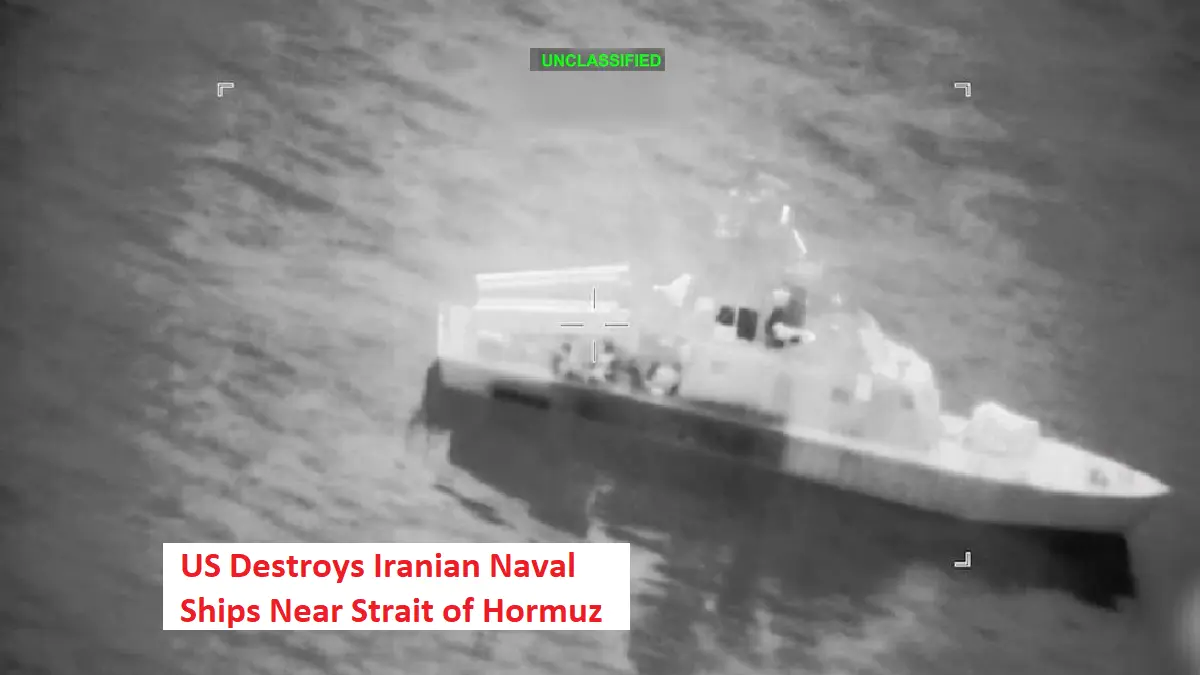
The incident in which the US destroys Iranian naval ships near Strait of Hormuz has significantly increased tensions in the Middle East and raised fears of a wider regional conflict. According to U.S. military officials, several Iranian vessels suspected of preparing to lay naval mines were targeted and destroyed near the strategic waterway.
The Strait of Hormuz is one of the most critical global shipping routes, carrying nearly 20 percent of the world’s oil supply every day. Any disruption in this narrow passage could trigger sharp increases in global oil prices and affect energy markets across Asia and Europe.
US Claims Destruction of Iranian Mine-Laying Boats
The United States Central Command (CENTCOM) confirmed that U.S. forces struck 16 Iranian boats believed to be capable of laying naval mines in the waters near the strait. Earlier statements from U.S. leadership suggested that at least 10 vessels had been destroyed, but officials later updated the number after assessing the damage.
Military footage released by U.S. authorities reportedly shows missiles striking small Iranian vessels. The strikes are believed to be part of a broader military campaign targeting Iranian missile infrastructure and naval capabilities. Officials claim that more than 50 Iranian vessels have been damaged or destroyed during recent operations.
Iran Condemns the Attack and Warns of Retaliation
Iran strongly condemned the strikes, calling them a dangerous escalation. Iranian officials warned that they could retaliate if attacks continue, even threatening to halt oil exports from the region to countries they consider hostile.
Tehran has also launched missiles and drones toward U.S. positions in response to the growing confrontation. However, Iranian authorities deny the U.S. claims that their boats were laying mines in the Strait of Hormuz, insisting that the accusations are unfounded.
Meanwhile, several international players are becoming increasingly concerned. Some governments have called for an immediate ceasefire, while Russia has reportedly urged discussions at the United Nations to prevent the conflict from spreading further.
Why the Strait of Hormuz Matters
The Strait of Hormuz connects the Persian Gulf to the Arabian Sea and lies between Iran and several Gulf nations. It is considered one of the most strategically important maritime chokepoints in the world.
A significant portion of global oil exports passes through this narrow channel daily. Because of its importance, even the threat of disruption can cause major fluctuations in oil markets. Shipping companies have already begun exploring alternative routes or increasing pipeline use to avoid the region.
Energy companies and governments are closely monitoring the situation, and some countries are considering releasing emergency oil reserves if supply disruptions occur.
US Destroys Iranian Naval Ships: Rising Military Tensions
The United States is reportedly considering deploying naval escorts for oil tankers traveling through the Strait of Hormuz. Similar protection missions have been used in the past during periods of high tension in the region.
However, such actions could increase the risk of direct confrontations between U.S. and Iranian forces. Military analysts warn that further escalation could destabilize the entire Middle East and disrupt global trade routes.
What Happens Next?
The coming weeks are likely to be critical in determining whether the situation calms down or escalates further. The United States has indicated it will continue protecting international shipping routes, while Iran has vowed to respond to any further military actions.
With global energy markets watching closely, the destruction of Iranian naval vessels near the Strait of Hormuz could prove to be a turning point in the ongoing confrontation between Washington and Tehran.
FAQ: US Destroys Iranian Naval Ships Near Strait of Hormuz
1. Why did the US destroy Iranian naval ships near the Strait of Hormuz?
U.S. military officials say the strikes targeted Iranian vessels suspected of preparing to lay naval mines in the Strait of Hormuz. According to the U.S., the action was taken to protect international shipping routes and prevent potential disruption to global oil supplies.
2. Why is the Strait of Hormuz so important to the global economy?
The Strait of Hormuz is one of the world’s most critical maritime chokepoints. Nearly 20% of the world’s oil supply passes through this narrow waterway every day, making it essential for global energy markets and international trade.
3. How many Iranian naval ships were destroyed in the incident?
U.S. Central Command (CENTCOM) reported that around 16 Iranian boats believed to be capable of laying naval mines were destroyed near the Strait of Hormuz. Earlier estimates mentioned about 10 vessels before damage assessments were updated.
4. How has Iran responded to the US strikes?
Iran strongly condemned the attack and warned of possible retaliation. Iranian officials also denied the accusations that their vessels were laying mines and stated that the claims are unfounded.
5. Could the conflict near the Strait of Hormuz affect global oil prices?
Yes. Any military tension or disruption near the Strait of Hormuz can quickly impact global oil markets. Even the threat of instability in the region can push oil prices higher because so much of the world’s energy supply moves through this route.
6. What role does the US Navy play in the Strait of Hormuz?
The U.S. Navy regularly patrols the region to ensure safe passage for commercial shipping and oil tankers. During periods of high tension, the United States may also provide naval escorts to protect vessels traveling through the strait.
7. Could this incident lead to a wider conflict in the Middle East?
Military analysts warn that continued escalation between the United States and Iran could increase the risk of a broader regional conflict. Diplomatic efforts from international organizations and world powers may play a key role in preventing further escalation.
Other Post: Iran War Oil Prices Surge Past $100 and Shake Global Energy Markets
What Is NATO? How the 75-Year-Old Alliance Still Shapes Global Politics
 Follow Us On Google News
  Follow Us On WhatsApp
Leave a Comment