

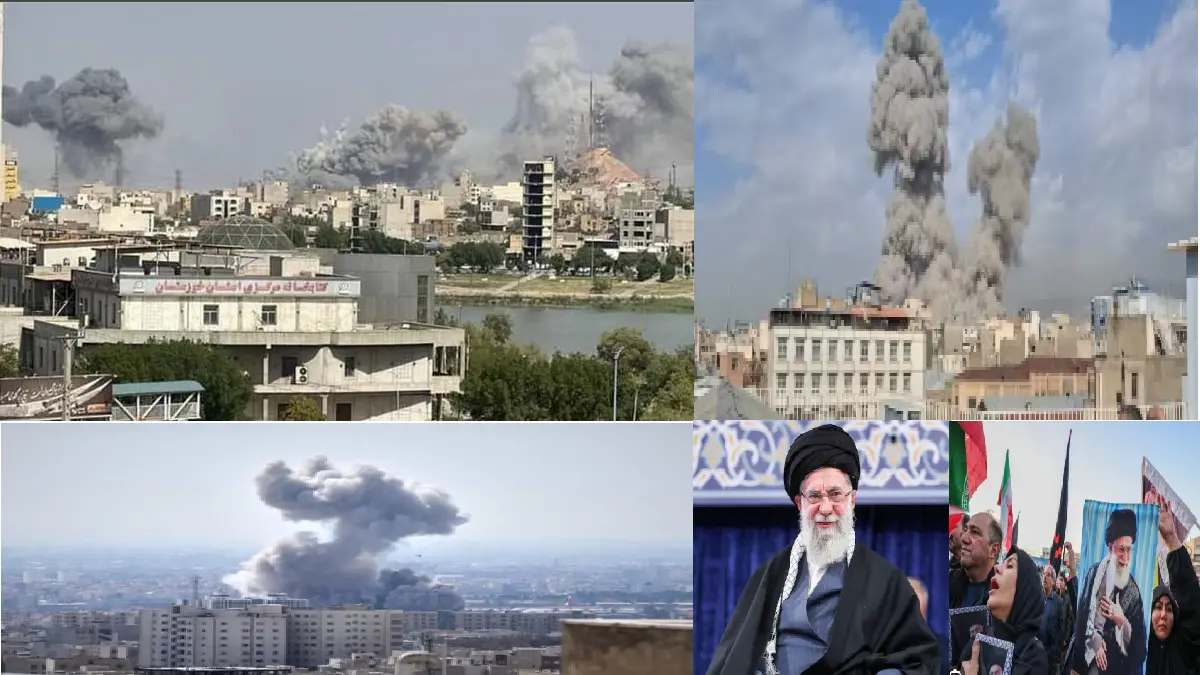
US–Israel Strikes Against Iran have dramatically escalated tensions in the Middle East following coordinated air and missile attacks targeting Iranian military facilities, nuclear infrastructure, and senior leadership. In a development that has sent shockwaves across the globe, Iran’s Supreme Leader, Ayatollah Ali Khamenei, was reportedly killed during the operation.
He was 86 and had led Iran since 1989, shaping the country’s political and religious direction for nearly four decades.
According to statements from Washington, U.S. President Donald Trump confirmed the operation’s success, stating that the strikes eliminated key members of Iran’s military leadership, including senior commanders of the Islamic Revolutionary Guard Corps (IRGC). Iranian state media later acknowledged Khamenei’s death and announced a 40-day national mourning period, with images emerging of large crowds gathering in Tehran.
Leadership Vacuum and Temporary Governance in Iran
In the aftermath of the strikes, Iran moved quickly to stabilize its leadership structure. Authorities appointed cleric Alireza Arafi to head a temporary governing council. Constitutional experts note that replacing a Supreme Leader is a complex and sensitive process involving the Assembly of Experts, and political uncertainty could deepen in the coming weeks.
The death of Khamenei has raised questions about succession, internal power struggles, and the future direction of Iran’s foreign and domestic policies.
Iran’s Retaliation and Regional Escalation after US–Israel Strikes Against Iran
Iran responded within hours. The IRGC described its counterattack as its “largest offensive ever,” launching waves of missiles and drones at U.S. military bases in the Gulf region and toward Israel. Authorities in Tel Aviv reported multiple interceptions but confirmed explosions and emergency evacuations in several districts.
The conflict expanded further when Hezbollah launched rockets from southern Lebanon into northern Israel, prompting retaliatory Israeli airstrikes inside Lebanon. Casualties and additional evacuations were reported, signaling a widening battlefield beyond Iran’s borders.
Protests Spread Beyond the Middle East
The impact of the US–Israel Strikes Against Iran has extended far beyond the immediate conflict zone. In Pakistan, protests turned violent, with reports indicating at least 20 fatalities during clashes between demonstrators and security forces.
In India, particularly in Kashmir and parts of Uttar Pradesh, large demonstrations were organized by Shia communities, highlighting the religious and political implications of the crisis. The unrest underscores how the conflict is resonating across South Asia and beyond.
Global Reactions: Divided World Powers
International reactions remain sharply divided. The United States and Israel’s allies defended the strikes as necessary measures to curb Iran’s military ambitions and regional influence.
Meanwhile, Russia and China strongly condemned the killing, calling it a violation of international law and demanding an immediate ceasefire. The European Union expressed concern about the potential for further destabilization but suggested that political change within Iran could open the door to renewed diplomatic engagement.
Militant groups aligned with Iran, including Hamas and the Houthis in Yemen, vowed continued resistance, raising fears of additional proxy conflicts.
Humanitarian Crisis and Economic Shockwaves
Iranian officials claim that hundreds of civilians have been killed in the strikes, including children in a reported school attack in southern Iran. Urban infrastructure has suffered extensive damage, compounding humanitarian challenges.
The conflict has also disrupted global markets. Oil prices surged sharply amid fears of supply disruptions, particularly around the strategically vital Strait of Hormuz. Several countries temporarily closed their airspace, leaving thousands of travelers stranded.
What Comes Next?
With Iran’s top leadership eliminated and retaliatory strikes ongoing, analysts warn that the US–Israel Strikes Against Iran could reshape alliances and ignite prolonged instability across the Middle East. The balance of power in the region may shift significantly depending on Iran’s succession process and the international community’s response.
As military operations continue and diplomatic efforts struggle to gain traction, the coming weeks may determine whether the region moves toward de-escalation—or faces a broader and more sustained conflict.
FAQ: US–Israel Strikes Against Iran
1. What happened during the US–Israel strikes on Iran?
The US–Israel strikes targeted Iranian military bases, nuclear facilities, and senior leadership. Reports indicate that Iran’s Supreme Leader Ayatollah Ali Khamenei was killed during the operation.
2. Who confirmed the death of Ayatollah Khamenei?
According to reports, Iranian state media confirmed Khamenei’s death, while U.S. officials stated the operation successfully targeted key Iranian leadership figures.
3. How did Iran respond to the strikes?
Iran launched missiles and drones toward U.S. bases in the Gulf region and Israel, calling it one of the largest retaliatory offensives by the Islamic Revolutionary Guard Corps (IRGC).
4. Who is currently leading Iran after the strikes?
Iran appointed cleric Alireza Arafi to head a temporary leadership council, while the Assembly of Experts will decide on a permanent successor to the Supreme Leader.
5. How has the international community reacted?
Countries are divided in their response. Some U.S. allies supported the strikes, while Russia and China condemned the operation, warning it could destabilize the region.
6. How has the conflict affected global markets?
The conflict caused oil prices to surge and raised concerns about disruptions around the Strait of Hormuz, a critical global energy shipping route.
7. Could the conflict spread beyond Iran and Israel?
Yes. The crisis has already expanded with Hezbollah rocket attacks from Lebanon and protests across several countries, raising fears of a broader regional conflict.
Other News: Pakistan-Taliban Border War Conflict Escalates After Airstrikes; Minister Calls It “Open War”
 Follow Us On Google News
  Follow Us On WhatsApp
Leave a Comment