

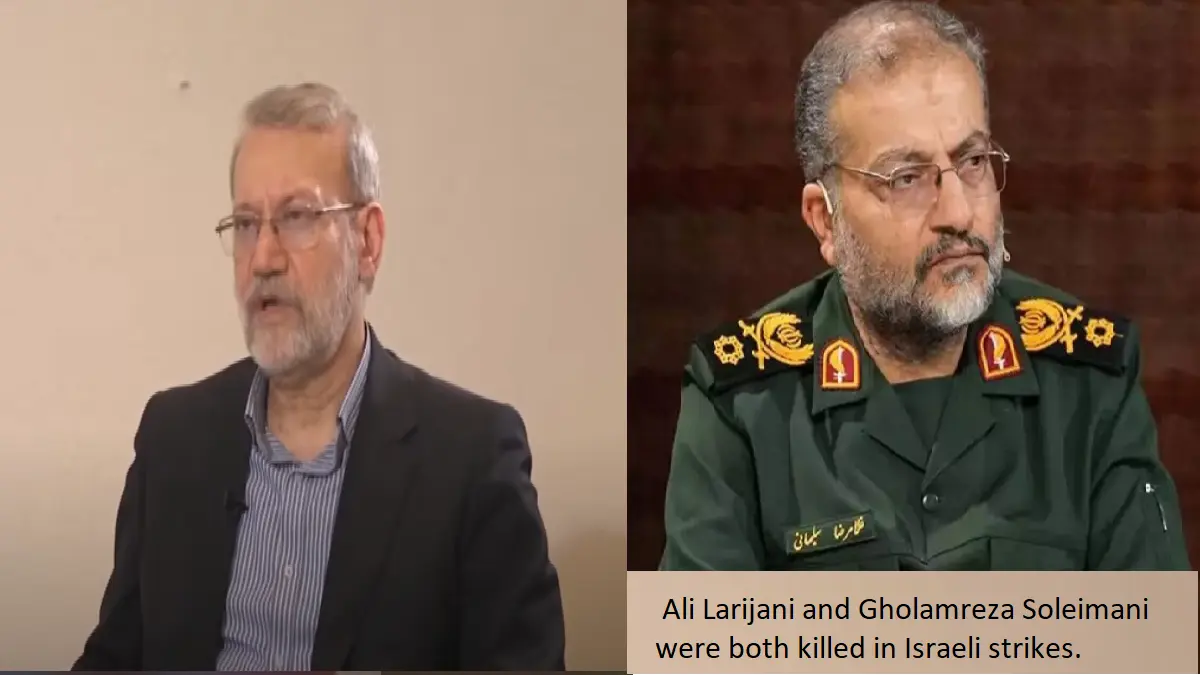
The Iran vows decisive retaliation warning has intensified global fears as tensions in the Middle East surge following deadly Israeli airstrikes. The latest escalation comes after Israel targeted key Iranian figures, triggering a strong response from Tehran and raising concerns of a broader regional conflict.
The situation is rapidly evolving, with military actions, political warnings, and global economic risks all pointing toward a potential large-scale war.
What Happened in the Strikes?
On March 17, 2026, Israel launched coordinated airstrikes across multiple locations in Iran, including the capital, Tehran. The strikes were aimed at weakening Iran’s military command structure and strategic capabilities.
Among those killed were Ali Larijani and Gholamreza Soleimani, both considered highly influential figures within Iran’s leadership.
Larijani had long been involved in national security and nuclear negotiations, making his death a significant blow to Iran’s political and strategic framework.
Why These Leaders Were Important
The loss of these leaders is not just symbolic—it directly impacts Iran’s internal and external operations.
Gholamreza Soleimani led the Basij forces, which play a major role in maintaining internal security and controlling unrest. His leadership was central to Iran’s domestic stability.
Meanwhile, Larijani’s influence extended into diplomacy and high-level decision-making, especially after the death of Ayatollah Ali Khamenei earlier in the conflict.
Their deaths have created a leadership vacuum at a critical time, increasing uncertainty within Iran’s power structure.
Other Related News: Meta and YouTube Social Media Addiction Case: Jury finds Instagram and YouTube liable in a landmark social media addiction trial
Iran’s Response: A Promise of Revenge, Iran Vows Decisive Retaliation
Iran responded swiftly, declaring that its retaliation would be “decisive” and impactful.
Missiles and drones were launched toward Israeli targets and across the region, including areas in Saudi Arabia, the United Arab Emirates, and Iraq.
Some of these weapons reportedly carried advanced warheads designed to bypass defense systems and maximize damage. Initial reports indicate casualties and injuries in Israel, highlighting the seriousness of the retaliation.
A War That Is Rapidly Escalating
This latest development is part of a broader conflict that began in late February 2026. Israeli strikes, reportedly supported by the United States, targeted Iran’s nuclear and military infrastructure.
The earlier killing of Ayatollah Ali Khamenei marked a turning point, escalating the conflict into a prolonged and dangerous confrontation.
Now entering its third week, the conflict has resulted in thousands of casualties, with continuous exchanges of missile and drone attacks intensifying the crisis.
Impact Beyond Iran and Israel
The conflict is no longer limited to Iran and Israel. It is spreading across the Middle East, affecting multiple regions.
Missile strikes have reached Gulf countries, while tensions have increased in Lebanon due to Iran-backed groups. The situation around the Strait of Hormuz is particularly concerning, as disruptions there could severely impact global oil supply.
This has already contributed to fears of a global oil price surge in 2026, with markets reacting to potential supply disruptions.
Global Reactions and Concerns
World leaders have called for restraint and diplomatic solutions to prevent further escalation. However, the situation remains volatile.
The United States has increased its involvement, conducting strikes on Iranian positions in support of Israel. At the same time, global markets are experiencing instability due to rising geopolitical risks.
Experts warn that continued loss of key leaders could weaken Iran internally but may also push it toward more aggressive actions externally.
What Happens Next?
The future of the conflict remains uncertain. Iran has made it clear that it will not back down, while Israel continues to signal further military action.
The possibility of a wider regional war is growing, with more countries at risk of being drawn into the conflict. As tensions rise, the world watches closely, aware that the situation could escalate into a prolonged and devastating crisis.
FAQs
1. What happened on March 17, 2026?
Israel carried out airstrikes in Iran targeting key military and political leaders.
2. Who were the leaders killed in the strikes?
Ali Larijani and Gholamreza Soleimani were among the top figures killed.
3. Why are these deaths important?
They played major roles in Iran’s security, leadership, and decision-making.
4. How did Iran respond?
Iran launched missiles and drones and promised strong retaliation.
5. Is this conflict getting worse?
Yes, tensions are rising quickly, and the conflict is expanding.
6. Which countries are affected?
Apart from Iran and Israel, regions like Saudi Arabia, the UAE, and Iraq are impacted.
7. Could this lead to a bigger war?
Yes, there is a risk of a wider regional conflict.
8. How is the world reacting?
Global leaders are urging peace, but tensions remain high.
9. What is the impact on oil prices?
There are fears of rising oil prices due to supply disruptions.
10. What could happen next?
The situation may escalate further or move toward diplomatic talks.
Other News: Trump’s NATO Ultimatum: Europe Pushes Back as Iran War Deepens Global Divide
 Follow Us On Google News
  Follow Us On WhatsApp
Leave a Comment