

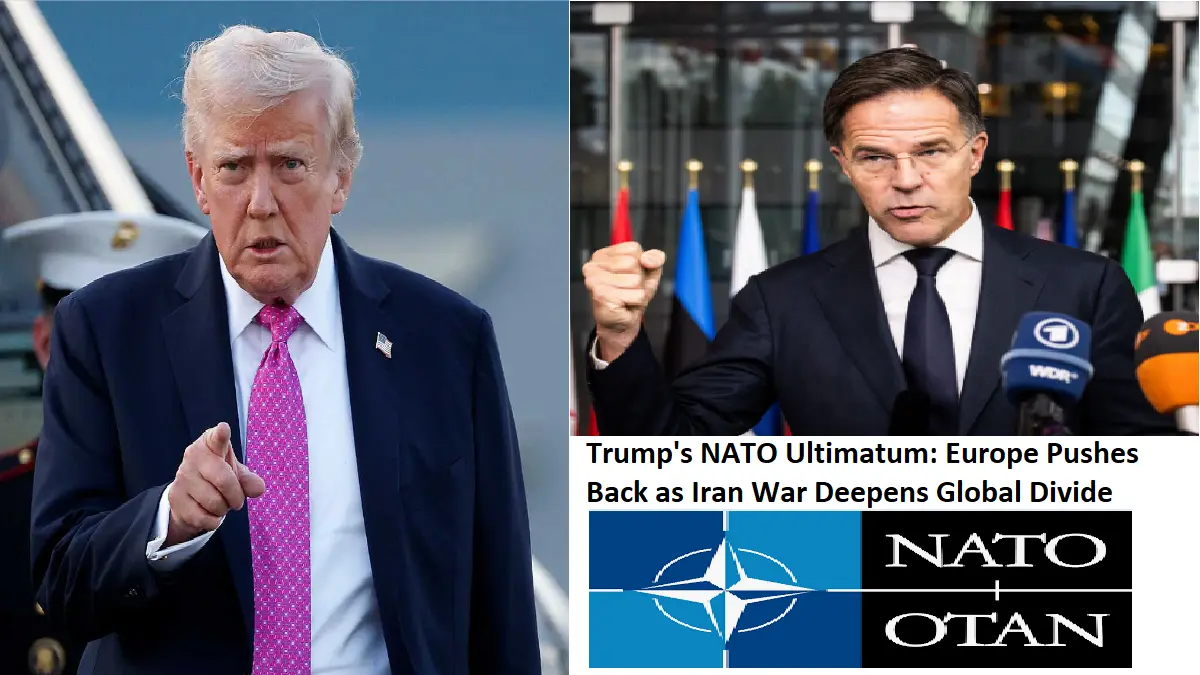
The Trump’s NATO ultimatum has intensified a growing global crisis as the US Iran war 2026 continues to escalate. What began as a regional conflict has now evolved into a broader geopolitical challenge, raising concerns about a deepening NATO crisis 2026. With global tensions rising 2026 and increasing world war fears Iran conflict, divisions within the Western alliance are becoming more visible.
The ongoing conflict between the United States and Iran, which began in late February 2026. As tensions intensify, U.S. President Donald Trump has issued a stark warning to European allies, demanding greater military involvement through NATO—or risk weakening the alliance itself.
A Stark Warning from Washington
At the center of the crisis is the strategically vital Strait of Hormuz, a narrow passage through which nearly 20% of the world’s oil supply flows. Recent Iranian military actions—including attacks on commercial vessels and the deployment of naval mines—have severely disrupted global energy supply chains.
As a result, oil prices have surged past $100 per barrel, sending shockwaves through international markets. The impact is particularly severe in Europe, which remains heavily dependent on energy imports from the region.
Trump has urged NATO members to deploy naval forces to secure the waterway, framing the move as essential for global economic stability.
Europe Pushes Back
Key European powers—including the United Kingdom, France, and Germany—have so far resisted calls for direct military involvement.
Leaders across Europe argue that NATO is fundamentally a defensive alliance and should not be drawn into offensive operations that could escalate the conflict further. Memories of past interventions in the Middle East, particularly the Iraq War, continue to shape public opinion and political caution.
German officials have also raised concerns about the absence of a clear long-term strategy, warning that involvement without a defined end goal could lead to prolonged instability.
Other Related Posts: Meta and YouTube Social Media Addiction Case: Jury finds Instagram and YouTube liable in a landmark social media addiction trial
Why Europe Is Hesitant
The current standoff highlights deeper fractures within NATO. Trump has repeatedly criticized European nations for insufficient defense spending, and his latest ultimatum has intensified tensions.
Some European policymakers view the pressure as coercive, sparking debate over whether NATO members should automatically align with U.S. military priorities. The situation raises fundamental questions about the alliance’s future direction and unity in times of crisis.
Iran Escalates the Conflict
Meanwhile, Iran has continued to escalate hostilities through drone and missile strikes targeting U.S. military bases and critical infrastructure in the region. In response, the United States—alongside Israel—has carried out retaliatory strikes on Iranian positions.
The conflict is increasingly drawing in multiple actors, raising fears of a wider regional war with global consequences.
Energy Crisis Adds Pressure
Rather than committing troops, European nations are exploring alternative strategies. These include coordinating with Gulf partners to secure shipping lanes, increasing strategic energy reserves, and pushing for diplomatic efforts to reopen the Strait of Hormuz.
While these measures may provide temporary relief, analysts warn they may not be sufficient to fully stabilize global energy markets.
A Shifting Global Order
The crisis is also accelerating broader geopolitical shifts. China has engaged in diplomatic outreach with Iran, while Russia stands to benefit economically from rising oil prices.
Across the Middle East, alliances are evolving rapidly, signaling a potential transformation in global power dynamics. Long-standing assumptions about Western unity are now being tested under pressure.
What Happens Next Due to Trump’s NATO Ultimatum?
As the conflict deepens, the future of NATO hangs in the balance. Continued European resistance could strain transatlantic relations, while further escalation risks drawing the alliance into a broader war.
Diplomatic solutions remain uncertain, and global markets continue to react to every new development. What is clear, however, is that this crisis has exposed significant divisions within one of the world’s most important alliances—at a time when unity may be needed most.
Frequently Asked Questions (FAQs)
Q1. What is Trump’s NATO ultimatum?
It is a warning from Donald Trump asking NATO allies to increase military support in the Iran conflict.
Q2. Why is Europe refusing to support the US against Iran?
European countries want to avoid escalation and prefer diplomatic solutions instead of war.
Q3. What is happening in the US–Iran war 2026?
The US and Iran are engaged in an ongoing military conflict with missile and drone attacks.
Q4. Why is the Strait of Hormuz important?
It is a key route for global oil supply, and any disruption affects oil prices worldwide.
Q5. Why are oil prices rising due to the Iran conflict?
Supply risks and tensions in the region are pushing oil prices higher.
Q6. Is NATO in crisis in 2026?
Yes, disagreements between the US and European countries are creating tensions within NATO.
Q7. Which countries are opposing Trump’s NATO plan?
Countries like the UK, France, and Germany are taking a cautious approach.
Q8. Could the US–Iran conflict lead to World War 3?
There is a risk, but the situation is still uncertain.
Q9. How is the Iran conflict affecting the global economy?
It is causing market instability and increasing energy prices.
Q10. Is there any chance of a diplomatic solution?
Yes, but tensions remain high, making it difficult.
Other News: US–Iran War 2026: Global Markets Crisis as Oil Prices Surge and Trade Disruptions Grow
 Follow Us On Google News
  Follow Us On WhatsApp
Leave a Comment